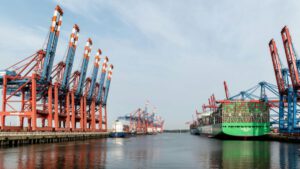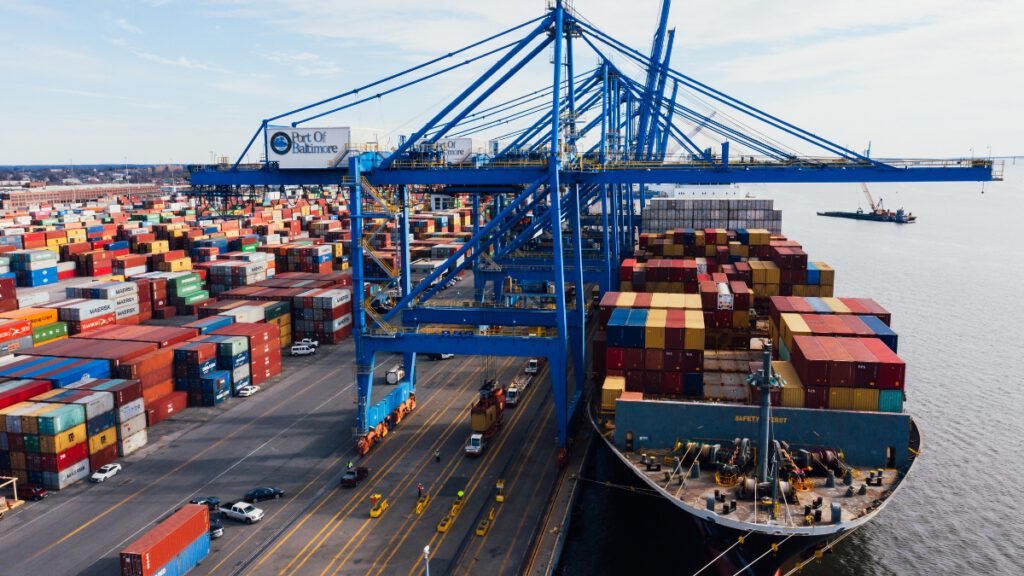
As emissions regulations tighten and sustainability expectations increase, shipping companies are looking for ways to turn environmental performance into tangible commercial advantages. The Environmental Ship Index (ESI) has become the world’s leading port incentive scheme, enabling shipping companies to benefit directly from their environmental performance through port fee discounts and other incentives. Today, more than 6,800 vessels and 100 ports participate in ESI globally.
But how does it actually work?
Benefitting from cleaner air and commercial incentives, happens in three steps:
How the Environmental Ship Index Works in Three Steps
1. Ships Report Relevant Environmental Data
Participation in the Environmental Ship Index starts with data transparency.
Ships (normally represented by the operator or DOC holder) report relevant environmental data to ESI. This includes:
-
Static vessel information
-
Limited dynamic operational data (reported semi-annually)
-
Engine specifications
-
Onshore Power Supply (OPS) installation
-
Bunker Delivery Notes (BDNs)
-
Distance sailed and bunker consumed
For OceanScore customers, parts of this data can be automatically extracted, significantly reducing manual effort.
The reporting process is structured and limited in scope, addressing a common misconception that ESI requires complex and continuous operational reporting.
2. OceanScore Collects, Verifies and Calculates the ESI Score
As the mandated administrator of the Environmental Ship Index, OceanScore plays a central role in ensuring consistency and transparency.
OceanScore:
-
Collects and verifies submitted environmental data
-
Supports shipping companies with data provision and technical questions
-
Calculates the official ESI Score, which combines:
-
NOx performance
-
SOx performance
-
GHG performance
-
-
Informs participating ports about the relevant scores on a regular basis
The ESI score reflects environmental performance beyond mandatory regulatory requirements and provides ports with a harmonised reference for incentive schemes.
3. Ports and Terminals Apply Incentives
Ports and terminals participating in ESI define their own individual incentive schemes.
Typically, these take the form of:
-
Port due discounts
-
Fee reductions
-
Preferential treatment based on ESI score thresholds
Once the ESI score is provided, participating ports can automatically compute the applicable incentive and reduce the respective invoice.
For shipping companies, this means that improved environmental performance translates directly into financial savings.
In many cases, the savings generated from just one call at an ESI member port exceed the annual participation fee.
Why the Environmental Ship Index Matters
The Environmental Ship Index is governed by the International Association of Ports and Harbors (IAPH) and recognized by the International Maritime Organization (IMO).
It provides:
-
A globally harmonised framework
-
Recognition of environmental performance beyond regulation
-
A direct commercial incentive for emissions reduction
-
A simple, structured reporting process
As more ports participate, the cumulative impact strengthens the business case for cleaner vessels and technological upgrades.
Turning Compliance into Commercial Success
Environmental compliance is no longer just about avoiding penalties. Increasingly, it is about unlocking opportunities. Through the Environmental Ship Index, shipping companies can transform emissions transparency into measurable commercial benefits while contributing to cleaner air in port regions worldwide.
OceanScore is glad to support more than 6,800 vessels and 100 ports on this journey. To explore how ESI works in more detail and how your vessels can benefit, visit our page on Environmental Ship Index participation for shipping companies.