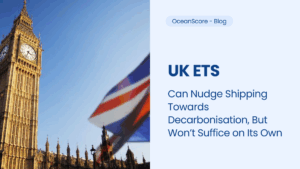
The UK Emissions Trading Scheme (UK ETS) will expand to maritime from 1 July 2026. For shipping companies, this adds another carbon-pricing framework alongside EU ETS and FuelEU Maritime.
The challenge is not only understanding the regulation itself, but integrating UK ETS into existing data, verification and commercial processes.
This guide outlines what is covered from July 2026, key milestones through 2027, and what shipping companies should focus on now.
Scope Overview: What Is Covered from 1 July 2026
From 1 July 2026, UK ETS maritime applies to:
-
Vessels ≥ 5,000 GT
-
Intra-UK voyages
-
Emissions at berth in UK ports
-
Intra-UK emissions (100%)
-
Voyages between Great Britain and Northern Ireland (50%)
The following are excluded at launch:
-
UK overseas territories
-
Crown dependencies
The emissions scope is based on CO2e, aligned with the broader greenhouse gas approach used in EU ETS.
There are no discounts for ice class.
Notes on Scope
Offshore vessels will be included from 1 January 2027, delayed to align with EU ETS expansion.
International voyages are not covered at launch. They remain subject to further consultation, with a proposed expansion to 50% of international voyage emissions from 2028.
Timeline Dashboard: Key Dates for 2026–2027
Now to June 2026: Preparation Phase
The focus now is system readiness.
Shipping companies should prioritise:
-
Checking UK ETS scope vessels and routes
-
Aligning internal processes for data collection and granularity
-
Engaging verifier readiness
-
Mapping responsibility allocation between owner, manager and charterer
-
Reviewing charter party clauses
-
Setting up allowance accounting processes
-
Aligning UK ETS workflows with existing EU ETS processes
From 1 July 2026: Go-Live
UK ETS becomes operational.
From this date, companies should:
-
Start monitoring emissions under UK ETS scope
-
Track intra-UK voyage emissions
-
Track emissions at berth in UK ports
-
Begin internal allocation of emissions and cost
-
Maintain audit-ready documentation
Using the OceanScore platform, shipping companies can track exposure, generate and follow up invoices, and simulate exposure.
2026 Reporting Cycle (1 July to 31 December 2026)
The first compliance year is shortened and runs from 1 July until 31 December 2026.
Key focus areas:
-
Continuous emissions tracking
-
Data validation and reconciliation
-
Verifier interaction
-
Invoice charterers
-
Collect or buy allowances
-
Monitor invoicing status
-
Allowance position tracking
2027 Key Milestones
-
1 January 2027 → Offshore vessels included
-
31 March 2027 → First verified emissions report due (for July–December 2026 emissions)
-
30 April 2028 → First allowance surrender due
For the first two scheme years, the UK applies a double-surrender concession, meaning 2026 and 2027 allowances are surrendered together.
Compliance Checklist for Shipping Companies
1. Scope and Exposure Definition
-
Identify UK domestic routes and port-related emissions
-
Classify vessels as fully in-scope or partially exposed
-
Define route-level exposure logic
2. Data Infrastructure
-
Ensure vessel-level emissions data availability
-
Maintain consistency with EU MRV where possible
-
Validate completeness and methodology alignment
-
Prepare for UK-specific reporting
3. Verification Readiness
-
Align with accredited verifiers
-
Maintain documentation traceability and audit trail across voyages
-
Avoid mismatches between system data and verified statements
4. Allowance Management
-
Set up UK Emissions Trading Registry access
-
Establish internal accounting processes
-
Track emissions versus allowances
-
Integrate into budgeting and financial planning
5. Commercial and Contractual Alignment
-
Define who bears carbon cost
-
Align charter party clauses and pass-through mechanisms
-
Ensure consistency across EU ETS and UK ETS
6. Route-Level Management
-
Track emissions per voyage and route
-
Assess cost impact on relevant trades
-
Enable route-based decision-making
How OceanScore Supports UK ETS Readiness
UK ETS adds another layer of commercial and administrative complexity. OceanScore helps shipping companies manage UK ETS alongside EU ETS and FuelEU Maritime through one structured workflow. Using OceanScore, companies can:
-
Track UK ETS exposure
-
Generate and follow up invoices
-
Monitor allowance positions
-
Simulate cost exposure
-
Align UK ETS with existing EU ETS workflows
Final Thoughts
UK ETS maritime starts on 1 July 2026. For shipping companies, preparation now is less about theory and more about execution.
The companies that are ready will be those that align scope, data, verification and commercial processes early. Contact us to turn compliance into commercial success.