Many shipping companies are still striving to define their strategy for EU ETS compliance some 80 days after implementation of the complex regulation, according to OceanScore, as it leverages lessons learned from clients to date to define best practice.
Shipowners are now required to acquire and account for EU Allowances (EUAs) on an ongoing basis, as well as allocate these to charterers, to cover the cost of their emissions from 2024 under the initial three-year phase-in of the EU Emissions Trading System (EU ETS).
But Albrecht Grell, co-Managing Director of Hamburg-based maritime technology firm OceanScore, says industry players are still grappling with questions over key issues around compliance, including demarcation of responsibility, EUA buying and accounting, charter party terms and, not least, data management.
‘Steep learning curve’
“There is a steep learning curve for companies, exacerbated by last-minute changes to the EU ETS that have left shipping scrambling to comply with the regulation. But the industry needs to get up to speed quickly, especially with FuelEU Maritime looming next year and further regulatory changes in the pipeline,” he says.
Grell points out some building blocks have yet to be put in place, with Maritime Operator Holding Accounts (MOHAs) required for holding EUAs still not available in some countries, after allocation of Administering Authorities for shipping companies at the end of January following EU approval of final implementation acts and publication of BIMCO clauses late last year.
Nonetheless, amid these challenges OceanScore has been able to gain some valuable insights into best practice from lessons learned on the frontline of the EU ETS through consultation with over 70 clients that have adopted its ETS Manager, a web-based digital tool that automates the complex process of tracking, accounting and allocating EUAs to facilitate efficient compliance.
Delegate responsibility – and soon
A key takeaway from client feedback is that delegating EU ETS responsibility to the Document of Compliance (DOC) holder can be a smart move to expedite compliance, Grell says.
While the shipowner is ultimately responsible for emissions under EU law, it can be beneficial to delegate duties in relation to procurement and allocation of EUAs to the DOC holder – typically the technical manager – who is already handling MRV reporting. This is especially the case for vessels owned by Special Purpose Vehicles (SPVs) due to simplification of account set-ups, according to OceanScore.
“There are efficiencies to be gained from aligning ETS with MRV responsibilities as it simplifies compliance and leverages existing expertise within your organization – and we advise prompt action to do so,” Grell says.
Risk of EUA price speculation
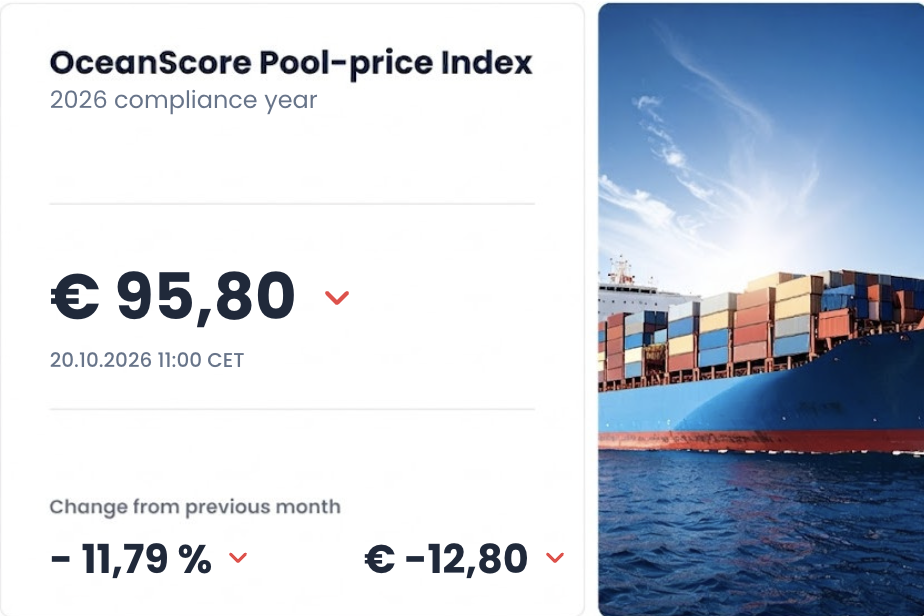
The task of acquiring EUAs can be challenging as compliance needs must be balanced against fluctuating market prices influenced by external factors such as global events, weather patterns and energy trends.
This raises questions about how to access EUAs, how and when to buy, and how many. But Grell advises against speculative buying due to the unpredictability of market pricing.
“The strategy should be pragmatic: buying EUAs as needed, based on operational requirements rather than speculative market movements. And with minor price variations between providers, it’s advisable to establish relationships with one or two trading partners rather than continuously shopping for the lowest price,” he says.
Keep contractual structures simple
In relation to charter parties, OceanScore proposes that settlements should be made in EUAs rather than cash to eliminate the risk of market price volatility, while stating complex contractual structures with divergent emission reporting and EUA requesting cycles should be avoided.
The firm also recommends keeping EU ETS terms in the SHIPMAN clear and simple, in response to a client in the bulk business who stated: “Why should I provide my manager with a monthly forecast of the EUAs? There is not much they can do with this and the volume of EUAs they need to provide is really limited anyways.”
On EUA accounting, the process of opening Union Registry trading accounts has proven time-consuming and challenging, particularly for non-European entities. OceanScore therefore advises players to wait and open an MOHA instead as this has a similar function, is easier to set up and eases management of EUAs – especially in scenarios involving corporate ownership structures or multiple vessels under a single manager.
Data management vital
Grell believes that “effective data management has never been more critical” as inadequate data handling risks non-compliance and consequent financial penalties. “The real challenge lies in ensuring digital compatibility, particularly in the availability of comprehensive APIs and the ability to offer detailed voyage and time-based analytics,” he says.
OceanScore has identified discrepancies between EU ETS rules and the existing MRV framework that “caught many data providers off-guard”, including treatment of off-hires and recognition of transshipment ports, according to Grell.
“It is therefore important to select the right data partner that understands the nuanced differences from MRV norms, while also having advanced digital capabilities to ensure your data management strategy supports seamless EU ETS compliance,” he concludes.