2026 Will Be a Demanding Year for Maritime Compliance
The regulatory environment for shipping will change materially in 2026.
FuelEU Maritime completes its first compliance cycle, EU ETS increases in scope and cost, and new regional regimes begin to take shape. For shipowners, managers, and charterers, the commercial consequences are significant: higher exposure, more complex cost allocation, and tighter workflows across technical, commercial, and finance teams.
To remain in control, companies will need reliable systems, clear processes, and full transparency of their compliance position throughout the year.
Below is a structured overview of the regulatory developments that matter most for 2026.
1. FuelEU Maritime: First Compliance Cycle Concludes
The first FuelEU Maritime year ends with verification and compliance statements due by April 2026.
Companies will need complete and accurate data on their annual compliance balance, including:
-
operational profiles
-
actual fuel consumption
-
onboard emissions
-
surpluses or deficits
-
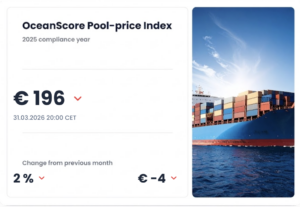
pooling arrangements agreed for 2025
FuelEU will continue to be a year-round process, with cost exposure shifting depending on deployments, fuel types, and trading patterns.
2. EU ETS: 100% Phase-In From 1 January 2026
From January 2026, all regulated emissions fall under EU ETS.
This marks the final step up from the 70% phase-in applied in 2025, increasing cost exposure across most deep-sea and short-sea segments.
For shipping companies, this means:
-
higher EUA requirements
-
greater financial impact from operational inefficiencies or data gaps
-
increased need for accurate and timely statements to charterers
Clear Charter Party and SHIPMAN clauses will remain essential to allocate responsibilities correctly.
3. EU ETS Moves From CO₂ to CO₂e
A further change applies from 1 January 2026: exposure will be calculated in CO₂-equivalent (CO₂e).
Methane (CH₄) and nitrous oxide (N₂O) will now form part of reported emissions.
This affects:
-
exposure forecasting
-
cost allocation
-
contractual settlements
-
vessel efficiency assessments
Companies will need workflows that can incorporate CO₂e factors reliably to avoid discrepancies later in the verification or invoicing stages.
4. UK ETS: Start Expected on 1 July 2026
The United Kingdom intends to introduce its own ETS for shipping from 1 July 2026.
Initial scope includes:
-
intra-UK voyages
-
port stays, treated as intra-UK activity
A likely second phase from 2028 may extend the scheme to voyages to and from UK ports, aligning it more closely with EU ETS treatment.
This adds another layer of commercial responsibility for companies trading in or calling at UK ports.
5. IMO Net Zero Framework: Uncertain Outlook
After the unexpected postponement of the IMO’s Net Zero Framework, two further decision points are scheduled:
-
MEPC April 2026
-
MEPC October 2026
However, the outcome remains uncertain.
In the meantime, regional systems — EU ETS, FuelEU Maritime, UK ETS — continue to define the commercial environment for global shipping.
6. Possible Inclusion of Vessels Below 5,000 GT
The European Commission is evaluating whether EU ETS should extend to vessels below 5,000 GT.
If political discussions advance in 2026, this may bring additional segments under the ETS framework, widening exposure for a larger part of the global fleet.
Implications for Shipping Companies: More Exposure, More Complexity, and Higher Commercial Risks
Across all regulatory developments, one conclusion is consistent:
2026 will require better visibility, stable workflows, and clear responsibility flows.
The combination of:
-
expanding emissions coverage
-
CO₂e accounting
-
multiple regimes (EU ETS, FuelEU, UK ETS)
-
evolving charter party and SHIPMAN clauses
-
tighter timelines and higher financial stakes
makes spreadsheet-based processes increasingly unsustainable.
Shipping companies will need structured systems to manage:
-
real-time exposure
-
cost allocation between owners and charterers
-
statement and invoice generation
-
verification status
-
FuelEU pooling and surplus management
-
forecasting and scenario simulations
-
contractual logic across changing deployments
How OceanScore Supports Commercial Compliance in 2026
OceanScore’s Compliance Manager is designed to provide the structure needed in this environment. It supports shipping companies by:
-
increasing efficiency through automated workflows
-
managing risk with 360° transparency of exposure, responsibilities, disputes, and open positions
-
enabling better decisions with forecasting, simulations, and clear cost allocation logic
-
supporting FuelEU pooling through a fully transparent marketplace
As regional and global frameworks continue to evolve, predictable processes and reliable data will be essential for reducing operational and financial risk.