The EU Ports Strategy, published in March 2026, sets a new direction for Europe’s ports at a time of increasing pressure to decarbonise, digitalise and strengthen resilience.
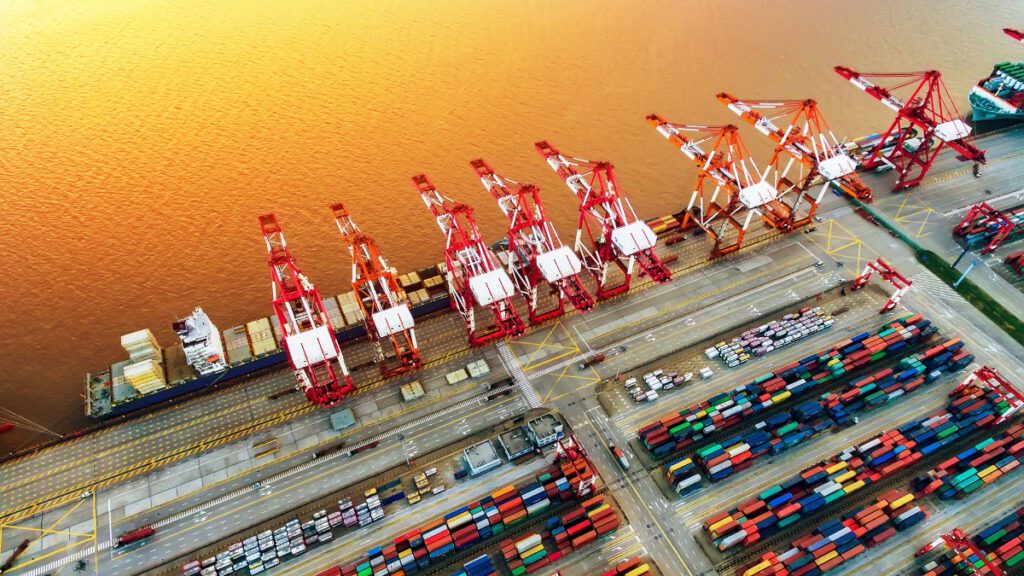
Ports already handle around 74% of the EU’s external trade, making them critical to Europe’s economy, energy transition and supply chains. But as ports evolve into multi-functional industrial hubs, expectations are rising quickly.
The new EU Ports Strategy outlines what needs to be achieved. The challenge now is clear: how can ports turn these ambitions into measurable results?
Why the EU Ports Strategy Matters
The EU Ports Strategy reflects a shift in how ports are viewed—not just as logistics hubs, but as key enablers of Europe’s clean energy transition and industrial competitiveness.
Ports are expected to:
- reduce emissions and improve air quality
- support electrification and alternative fuels
- digitalise operations and decision-making
- strengthen resilience and security
At the same time, ports must remain competitive and continue to handle growing volumes of trade.
This creates a structural trade-off: investing in sustainability while maintaining efficiency and economic performance.
The 5 Priorities of the EU Ports Strategy
The EU Ports Strategy is built around five key priorities. While broad in scope, they all point toward one common theme: ports must become more data-driven and performance-oriented.
- Competitiveness, Innovation and Digitalisation
Ports are expected to adopt digital technologies and improve coordination across the logistics chain. This includes scaling innovative solutions and improving data availability.
- Energy Transition and Sustainability
The Strategy places strong emphasis on electrification, clean fuels, and energy integration. Initiatives such as shore power and hydrogen infrastructure will play a central role.
- Security and Resilience
Ports must strengthen security frameworks, including cybersecurity and protection against external risks.
- Access to Finance and Investment
EU funding will support port transformation, but investments must be justified, targeted, and aligned with strategic priorities.
- Skills and Workforce Development
Ports will need a skilled workforce capable of managing new technologies and supporting the transition to cleaner operations.
What This Means for Ports in Practice
While the EU Ports Strategy sets clear priorities, it does not define how ports should operationalise them. In practice, this creates a gap between strategic ambition and day-to-day decision-making.
Based on OceanScore’s work with ports, emissions are rarely evenly distributed across port areas or vessel types. A limited number of vessel segments and operational zones often account for a disproportionate share of total emissions.
This makes targeted measures more effective than broad initiatives, but only if ports have sufficient visibility at vessel and port-area level. As a result, ports increasingly need to:
- Understand where emissions originate within their port areas
- Track the impact of investments such as shore power and electrification
- Evaluate environmental incentive schemes and their effectiveness
- Demonstrate progress to regulators, governments and local communities
- Benchmark performance against other ports
This marks a shift from high-level planning to data-driven operational management.
The Missing Piece: Consistent Measurement
While the EU Ports Strategy defines clear priorities, it does not establish a consistent framework for measuring progress across ports. In practice, this leads to fragmentation. Different ports apply different methodologies, making it difficult to benchmark performance or compare outcomes across regions.
At the same time, emissions from vessel calls — often the largest share of a port’s total climate impact — remain the most difficult to measure consistently.
Without reliable and comparable data, ports may struggle to answer fundamental questions:
- Are emissions actually decreasing?
- Which vessels contribute most to emissions?
- Are incentive schemes attracting cleaner ships?
- Where are the main emission hotspots within the port?
As regulatory pressure and stakeholder scrutiny increase, the ability to answer these questions becomes critical.
For a deeper look at how ports can measure emissions, see our guide to port emissions monitoring.
What Effective Measurement Looks Like in Practice
While the EU Ports Strategy emphasises data-driven decision-making, it does not define how ports should structure emissions measurement in practice.
Across ports, this typically requires visibility across several dimensions:
1. Coverage and Activity
Understanding how emissions are distributed across port traffic:
-
share of emissions by vessel segment
-
contribution of different vessel types and operational patterns
-
development over time
2. Environmental Performance
Comparing emissions across vessels and activities:
-
average CO₂, NOₓ and SOₓ emissions per call
-
emissions intensity during port stay
-
performance against regulatory benchmarks
3. Absolute Impact
Quantifying the effect of environmental measures:
-
total emissions reduction over time
-
impact of electrification or alternative fuels
-
contribution of specific vessel segments
4. Behavioural Change
Assessing whether measures influence fleet behaviour:
-
shift toward lower-emission vessels
-
changes in operational patterns
-
impact of incentive schemes such as the Environmental Ship Index (ESI)
In practice, many ports already apply elements of this framework — but often without consistent data across all vessel calls.
Without this level of detail, it remains difficult to evaluate which measures are effective and where further action is required.
From Strategy to Action: The Role of Emissions Data
Implementing this level of measurement requires a shift in how emissions data is collected and analysed. Many ports still rely on high-level estimates or partial datasets, limiting their ability to evaluate the impact of investments or prioritise actions effectively.
Operationally, this level of measurement requires:
-
continuous emissions measurement across all vessel calls
-
visibility at vessel, ship type and port-area level
-
time-based analysis to track trends and improvements
-
consistent methodologies to enable benchmarking and comparison
With this level of detail, ports can prioritise actions and assess impact more effectively. This is also essential for transparent reporting, both internally and toward regulators, governments and local communities.
How PortView Supports the EU Ports Strategy
PortView is designed to help ports turn strategic ambitions into actionable insights.
By combining vessel activity data with emissions modelling, PortView enables port emissions monitoring across all port areas.
Ports can:
- analyse emissions by vessel, ship type and pollutant
- identify high-emitting vessels and segments
- track emissions over time
- detect emission hotspots within terminals and anchorages
- evaluate the impact of shore power and incentive schemes
This allows ports to measure, manage and communicate their environmental performance in line with the objectives of the EU Ports Strategy.
OceanScore supports ports globally in analysing vessel-related emissions and building data-driven clean air strategies.
Turning Ambition into Measurable Results
The EU Ports Strategy sets a clear direction for the future of European ports—focused on sustainability, innovation and resilience.
However, the success of this strategy will depend on how effectively ports can translate ambition into measurable progress.
Reliable emissions data and port emissions monitoring will play a central role in this transition, enabling ports to:
- make better investment decisions
- track the impact of environmental initiatives
- demonstrate accountability to stakeholders
Explore PortView
To understand how your port can measure emissions and track progress in line with the EU Ports Strategy, you can explore PortView directly.