Switching fuels is the most frequently discussed pathway to meeting the requirements of FuelEU Maritime. But the choices shipping companies make about bunkers will significantly impact compliance costs. Companies must navigate a complex fuel market and assess the viability of different options based on commercial, technical, and operational factors, according to maritime data and technology firm OceanScore.
“Fuel selection is the most important lever under FuelEU,” says OceanScore Managing Director Albrecht Grell. “Your choice of fuel can either create a surplus or a deficit in your compliance balance, directly affecting your costs.”
Grell adds: “Choosing the right fuel can help avoid penalties and even create revenue by pooling surpluses. But not all alternative fuels are the same, and their viability often depends on future pooling prices, which are hard to predict.”
Fuel pathways
FuelEU charts a course for reducing emissions in shipping, with a target near net-zero by 2050. For now, two main options are available to meet the GHG threshold of 89.3gCO2e/MJ until 2029:
- LNG and LPG: These fuels, when used in dual-fuel engines, will meet the rules and can generate surplus compliance balances. However, their benefits will decline until 2040 as limits tighten.
- Biofuels: These are a good option for most vessels. They are usually used in blends (eg. B20-B30) with conventional fuels. These blends will be compliant until 2040; higher blends or pure biofuels will be needed thereafter.
Different rules for biofuels
One issue is that EU ETS and FuelEU Maritime treat biofuels differently. Under EU ETS, biofuels are considered zero-emission, meaning companies don’t need to buy carbon credits. But under FuelEU, the rules are stricter.
“FuelEU doesn’t count all biofuels equally,” Grell explains. “Fuels made from food or feed crops are treated like conventional fuels in terms of emissions. Only waste-based biofuels are fully compliant, and even then, their specific GHG values are above zero.”
This difference matters. Standard biofuels, such as those from rapeseed or sunflower seeds, still benefit from ETS discounts but fall short under FuelEU. For full compliance, waste-based biofuels are needed, such as those from used cooking oil or animal fat. Further complications are added when considering the different rules behind the 50% discounts applied to voyages to and from the EU under the two regulations.
The complication of bunker choices
OceanScore, which provides advanced solutions to facilitate efficient regulatory compliance, is assessing the impact of alternative fuels based on their relative carbon intensities, calorific values (LCVs), prices and ETS cost incurred, reflecting these in its FuelEU Planner. The challenge goes beyond selecting fuels with low GHG intensity and factors such as the vessel’s ice class or whether voyages are intra-EU or international also influence compliance balance.
If companies bunker more expensive alternative fuels like biofuels, there is no guarantee it will always pay off. “FuelEU allows for pooling of compliance surpluses and deficits,” Grell says. “Surpluses generated by using compliant biofuels can be sold in the compliance market to vessels in deficit.”
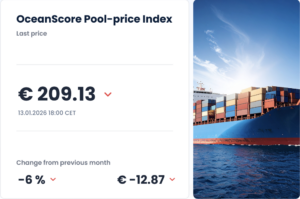
OceanScore’s analysis indicates that the compliance market will be in surplus by January 1, 2025. “This surplus will put downward pressure on pooling prices, meaning it might be cheaper to buy a compliance surplus in the pool rather than generate it through compliant bunkering on your own vessels,” Grell explains. “Both approaches would be compliant with FuelEU regulation and need to be considered at least from a commercial angle.”
Given this, any sound compliance strategy must look beyond fuel selection alone and consider the broader market dynamics. “Our FuelEU Planner integrates these variables into a comprehensive scenario simulation,” says Grell. “This is crucial because tackling FuelEU successfully requires charterers, managers, and owners to collaborate using a shared, fact-based approach.”
Building a sound compliance strategy
Grell outlines several key steps for shipping companies to optimise their compliance strategies. First, they must gain a thorough commercial understanding of the economics of different fuels, considering their prices, calorific values (LCVs), EU ETS costs, and the cost of pooling FuelEU compliance balances.
At the same time, the technical and operational feasibility of using biofuels across different vessels should be assessed. While tests so far indicate that biofuels can be used without significant issues, lingering concerns over engine compatibility and tank systems remain.
“Engine manufacturers need to give the green light, and bunker providers must be identified in key ports,” Grell notes. “For now, many companies focus biofuel usage on a smaller portion of their fleet to simplify operations and reduce risks.”
Contractual challenges
However, one of the biggest hurdles remains contractual. “How do you protect the DOC holder, who is responsible for penalties, from the fuel decisions of the charterer? How do you fairly share the costs of biofuels and the value of surpluses? And how do you manage uncertainties tied to deployment patterns and fuel accountability under FuelEU?” Grell asks.
Without clear contractual terms, companies risk major financial and operational pitfalls. “To align incentives across owners, managers, and operators, you need clauses in agreements like Shipman and Charter Parties,” he adds. “The ‘polluter pays’ principle is not embedded in FuelEU, so a robust data-driven understanding of the entire value chain is essential to avoid costly disputes.”
Simplifying compliance
OceanScore’s FuelEU Planner provides a clear path through the complexity. By simulating fuel use, compliance costs, and pooling options, the tool enables companies to budget effectively and negotiate data-driven contracts.
“We make the complex FuelEU regulations easier to manage,” Grell concludes. “With our solutions, companies can understand the commercial impacts of their fuel choices, gain full transparency and confidently manage their compliance strategy.”